How Artificial Intelligence reduces operating costs in SMEs without cutting the team
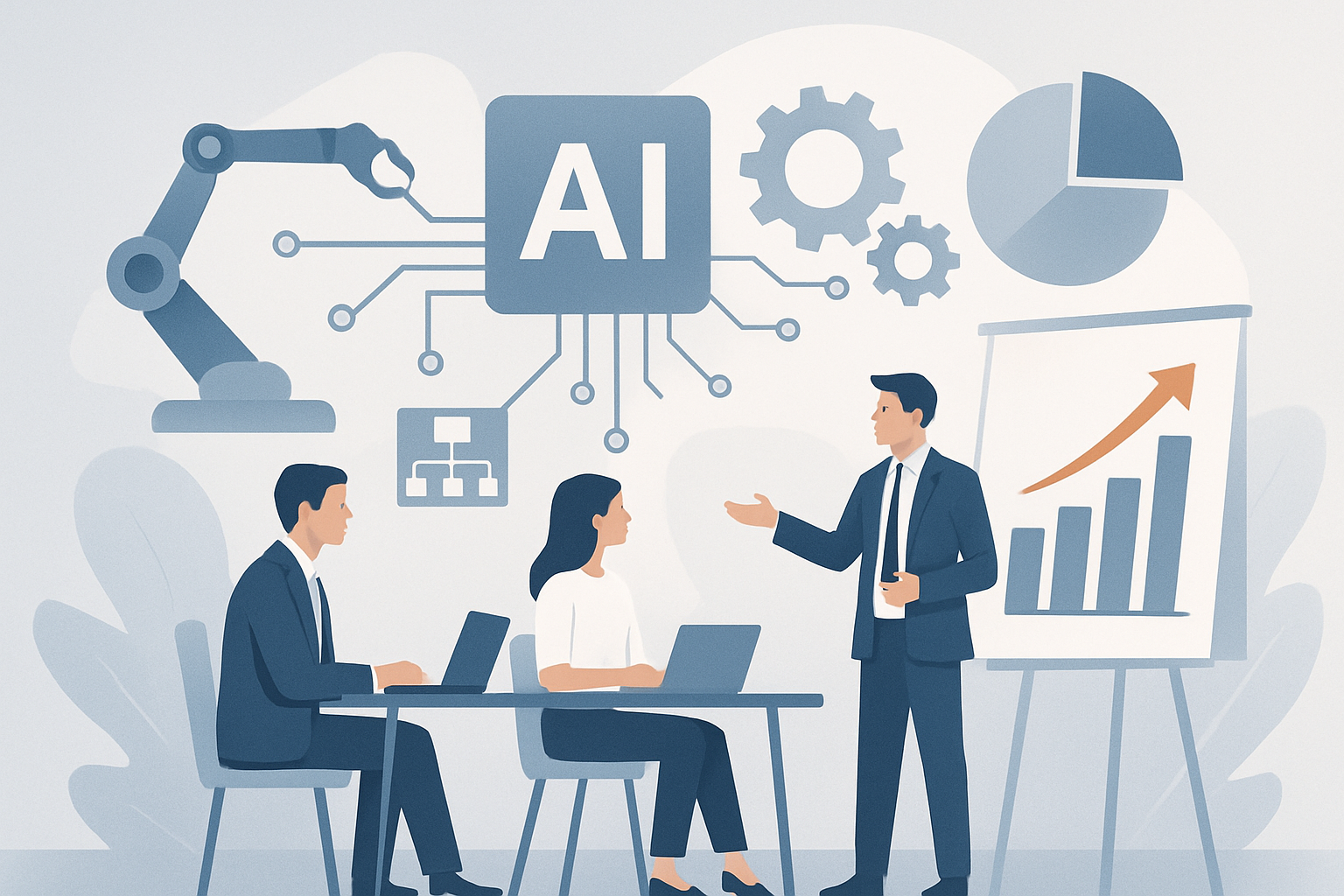
Artificial Intelligence (AI) is no longer a distant promise or a luxury reserved for large multinationals. More and more small and medium-sized businesses are integrating AI solutions into their day-to-day, with tangible results: lower costs, fewer errors, more time for customers and a more motivated workforce. It’s not about replacing people with machines, but about freeing teams from repetitive tasks and making a leap in efficiency. If you own or manage an SME and wonder how AI can help you cut costs without cutting staff, this article explains it clearly, with examples and concrete steps.
What tasks can AI automate in an SME and how does it impact costs?
Identifying the daily “bottlenecks”
In any SME, there are tasks that repeat daily and that, although necessary, consume valuable time and resources. Processing invoices, answering customers’ frequent questions, sorting emails, managing schedules, reviewing inventory… These are just a few examples. This is where AI can make the difference.
Concrete SME examples:
- Law firm: An 8-person firm spent more than 20 hours a week searching for documents and drafting standard responses for clients. By implementing an AI system for smart search and draft generation, they freed up that time to devote to complex cases and personalized service. Estimated savings: around 80 hours a month, valued at €1,600 (assuming an average cost of €20/hour).
- Car workshop: The manager received dozens of queries about quotes and availability. An AI virtual assistant started answering the most common questions and scheduling appointments automatically. Result: a 60% reduction in calls and emails, and the team could focus on technical work.
Why does it reduce costs?
By automating these tasks, the company needs fewer overtime hours, reduces the risk of errors (which can be costly) and makes better use of its team’s time. It’s not about firing people, but about letting each person add more human value, while the AI handles the repetitive work.
How AI improves customer service and reduces costly errors
A faster, more accurate customer experience
One of the biggest hidden costs in SMEs is in customer service: slow responses, incorrect information, errors in orders or bookings. These failures not only cost money, they also damage reputation and can keep a customer from coming back.
Real examples:
- Restaurant: A venue with phone bookings suffered errors in managing tables and orders. It implemented an AI system for online bookings and automatic WhatsApp confirmations. In three months, mismanaged bookings dropped by 90%, and customer satisfaction rose notably. It also freed the waiters from answering the phone, allowing more attention in the dining room.
- E-commerce: An online clothing store had frequent returns due to errors in product descriptions or shipping management. By using AI to review texts and automate order tracking, it reduced returns by 25% and improved its average Google rating.
Where are the savings?
Reducing errors means less time correcting, fewer expenses for shipping or compensation, and more satisfied customers who come back. For example, if an SME handles 200 orders a month and manages to avoid 10 errors (at €15 each, counting shipping, returns and time), it saves €150 a month in that line alone. AI doesn’t sleep or get distracted, so its reliability is a key advantage.
Optimizing time: freeing up hours for higher-value tasks
The “hidden” time stolen by operations
Many owners and managers feel their team works a lot, but not always on what’s most important. Unnecessary meetings, searching for information, administrative tasks… it all adds up. AI makes it possible to identify and automate many of these activities, giving the team time back to focus on what really adds value.
Practical mini-cases:
- Dental clinic: The reception staff spent more than 2 hours a day confirming appointments and sending reminders. By automating these processes with AI, that time was redirected to improving in-person service and attracting new patients. Result: a 90% reduction in no-shows and a 15% increase in patients seen per month.
- Real estate agency: Agents spent a lot of time filtering emails and calls from poorly qualified prospects. An AI system now automatically classifies leads and suggests personalized responses. The team can focus on the customers with the most potential, increasing the closing rate without working more hours.
How to start?
Make a list of repetitive tasks that you or your team do. Calculate how many hours a month they take. Think about what would happen if half that time were devoted to sales tasks, innovation or direct service. That’s the “AI dividend”: fewer routine tasks, more focus on the strategic. Many SMEs manage to free up between 10% and 30% of their team’s total time in the first few months.
AI and cost reduction in purchasing, inventory and logistics
Smarter decisions, less waste
Managing purchasing and the warehouse is often a major source of hidden costs: buying too much, running out of stock, losing sales due to shortages or accumulating products that don’t sell. AI helps forecast demand, optimize orders and reduce waste, adjusting inventory to real needs.
Application examples:
- Restaurant: A family restaurant adopted an AI system that analyzes past sales, weather and the local calendar to forecast weekly ingredient demand. Result: a 20% reduction in food waste and tighter purchasing, which meant a saving of €400 a month on perishables.
- Electronics store: A 6-employee SME used AI to analyze its sales history and adjust supplier orders. Now, average stock dropped by 30%, freeing up space and capital, and avoiding obsolete products in the warehouse.
Practical steps to start:
Review your purchasing and inventory over the last six months. How much have you had to throw away, return or sell at a low price? How many sales did you lose due to stockouts? A simple AI solution can start by analyzing your data and suggesting improvements. The impact is usually seen within a few months: less capital tied up, fewer losses and better customer service.
Improving decision-making: data and predictions within everyone’s reach
From intuition to information
Many decisions in SMEs are made “by gut feeling” or out of habit. AI makes it possible to analyze large amounts of data (sales, customers, trends) and offer concrete, easy-to-understand recommendations, even for non-technical people.
Examples of real value:
- Professional firm: A tax firm used AI to analyze patterns in its clients’ billing and anticipate workload peaks. This allowed it to plan resources better and avoid hiring extra staff in the busiest months.
- E-commerce: An online accessories store used AI to analyze which products were most successful at each time of year. By adjusting campaigns and offers, it increased sales by 18% in six months, without spending more on advertising.
Where to start?
Start by identifying what data you have: sales, customers, products, incidents. An AI tool can help you visualize trends and spot opportunities for improvement or savings. You don’t need to be a technology expert: many solutions “speak” the language of business and present information clearly, so you can make better decisions without wasting time on endless spreadsheets.
FAQs about AI and cost reduction in SMEs
Will AI replace my employees?
Not necessarily. In SMEs, the goal is usually to free people from repetitive tasks so they can focus on what adds the most value: customer relationships, creativity, sales or innovation. AI is a support tool, not a complete replacement.
Is it expensive to deploy AI in an SME?
The cost depends on the scope and complexity, but there are affordable solutions to start with. Many SMEs recover the investment in a few months thanks to time savings, fewer errors and better customer service. There are also pay-as-you-go options and pilot tests.
Do I need technical knowledge to use AI?
No. The best solutions for SMEs are designed for non-technical users. They integrate with the usual tools (email, CRM, website) and come with support for setup and follow-up.
Where do I start if I want to apply AI in my company?
The first step is to identify the most repetitive tasks or the common problems you’d like to solve. Then, consult experts who can advise you on the most suitable options for your case. An initial consultation is usually free and helps you see the real potential in your business.
Conclusion: take the first step toward a more efficient SME
Artificial Intelligence is already helping SMEs in every sector reduce costs, improve processes and offer better service, without needing to cut staff. With real examples and concrete benefits, the value is clear: fewer errors, more time for what matters and a superior customer experience. If you want to explore how AI can help you, at Futurynia we offer a free, no-obligation assessment. Discover new possibilities for your company at futurynia.com and take the first step toward a more efficient, competitive SME.
More news


Want this in your business?
Tell us about your case and we’ll send you an assessment with the highest-impact automations. Reply within 24 hours.
Request received!
We’ll get back to you within 24 business hours.