Artificial Intelligence in SMEs: opportunities, legal risks and how to move forward safely
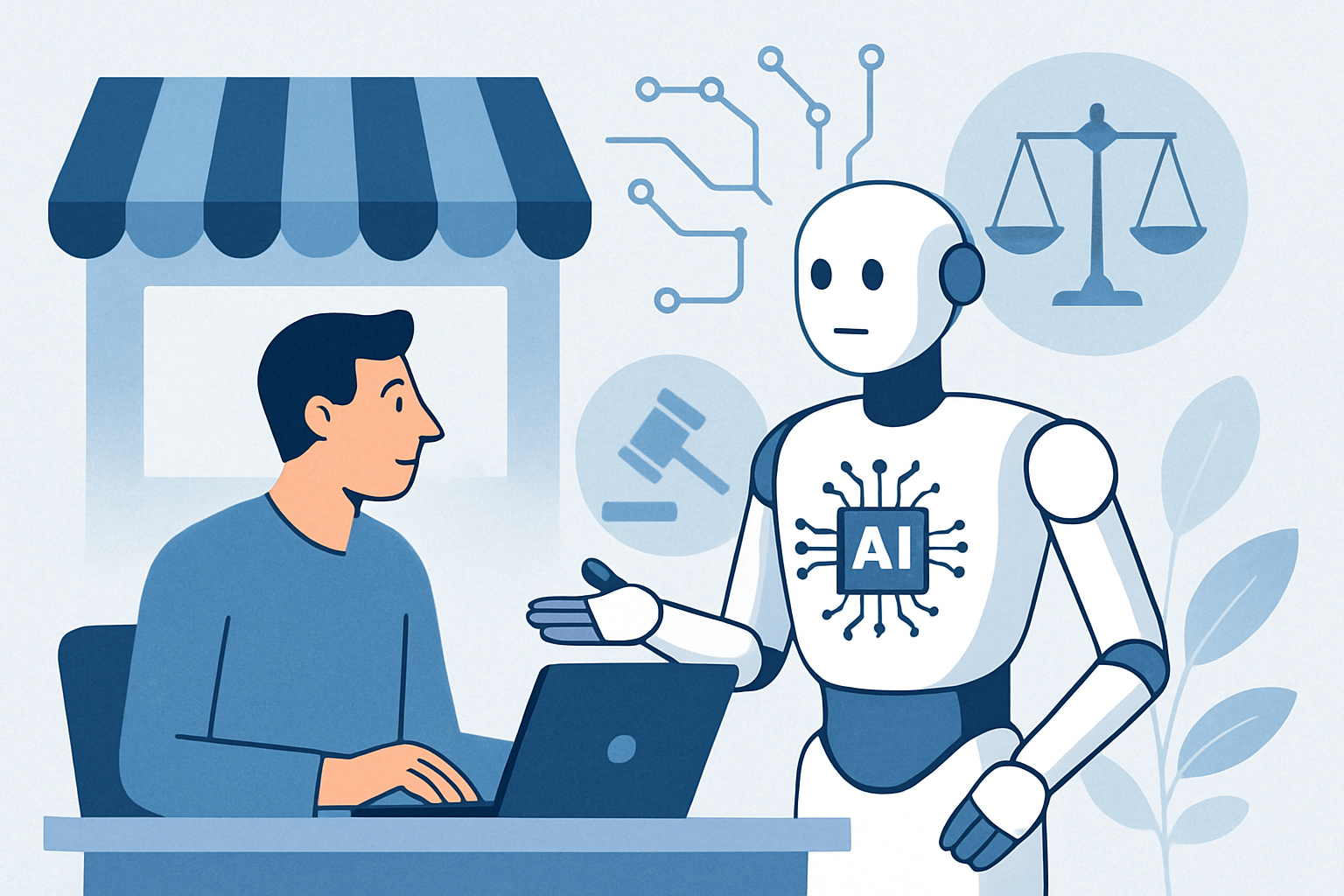
Artificial Intelligence (AI) is transforming the business landscape at an unprecedented pace. Every day, more small and medium-sized enterprises (SMEs) decide to adopt smart tools to improve their processes, deliver better services and cut costs. However, this race to adopt AI has also raised concerns among legal experts, who warn that many companies are unaware of the legal consequences of using it. In a context where competition and efficiency make the difference, understanding what is happening and how to move forward without making mistakes is essential for any SME that wants to grow in the new digital environment.
What is happening with AI and SMEs?
In recent months, the pace of adoption of AI-based solutions has grown notably among Spanish SMEs. From virtual assistants that manage appointments to systems that analyze customer data or automate administrative tasks, AI is finding its place in the day-to-day of companies across every sector. This trend is driven by the promise of boosting productivity, reducing errors and offering a more personalized customer experience.
However, as legal experts have warned in recent forums and media, many companies are implementing these technologies without a clear view of their legal implications. Enthusiasm for innovation sometimes outpaces caution, and there is a risk of overlooking key aspects such as the protection of personal data, transparency in the use of algorithms or liability for potential AI errors.
In practice, this means an SME could be using AI to analyze customer information, automate communications or make business decisions without having assessed whether it complies with current regulations, such as the General Data Protection Regulation (GDPR) or the upcoming European AI regulation. Ignorance does not exempt anyone from liability, and a poor implementation can lead to financial penalties or considerable reputational damage.
Why is this relevant for my SME?
The importance of this topic goes far beyond a simple technological fad. AI represents a real opportunity for SMEs to become more competitive against large companies, but it also creates a new risk landscape that cannot be ignored.
On one hand, AI tools can help an SME to:
- Automate routine tasks, freeing up time for higher-value activities.
- Personalize customer service, increasing loyalty and sales.
- Analyze large volumes of data to make better-informed decisions.
- Reduce human errors and improve operational efficiency.
On the other hand, a lack of understanding of legal obligations can result in:
- Financial penalties for the improper use of personal data.
- Loss of customer trust if the company is seen as not protecting their information.
- Legal problems if the AI makes discriminatory or erroneous decisions.
- Difficulties adapting to the European AI regulation, which will become increasingly demanding.
The balance between reaping the benefits and avoiding the risks is key. For an SME, this means getting informed, planning, and having partners who can advise throughout the technology adoption process.
Practical applications of AI in SMEs: cases and examples
AI is not exclusive to large companies. More and more SMEs are finding concrete uses that help them improve their daily operations. Let’s look at some real examples and how they were implemented:
1. Booking management in restaurants
A small restaurant in Valencia decided to implement an AI-based virtual assistant to manage bookings and answer customers’ most frequent questions via WhatsApp and social media. The result was a 60% reduction in the time spent handling calls and messages. In addition, the system automatically flagged possible duplicate bookings or no-shows, optimizing table usage.
2. Inventory analysis in fashion stores
A clothing store in Madrid used an AI tool to analyze sales and forecast product demand based on the season and trends. This made it possible to adjust orders and avoid both excess stock and shortages of popular products, improving the profit margin by around 8% during the first year.
3. Invoicing automation in advisory firms
A small accounting firm adopted an AI system to scan and process invoices received by email, classifying them automatically and detecting possible errors or duplicates. This not only reduced processing time by 50% but also minimized human errors and made tax compliance easier.
4. Customer segmentation in e-commerce
An eco-products e-commerce store used AI to segment its customers and personalize its marketing campaigns. By analyzing purchasing behavior and preferences, the conversion rate of email marketing campaigns increased by 15%, at a far lower cost than generic campaigns.
These cases show that AI can be a powerful ally for any SME, whatever its sector. However, the implementation process must be careful and always respect legal and ethical rules.
Risks and legal considerations: what every SME should know
Enthusiasm for AI should not make us lose sight of the associated risks, especially in the legal arena. Legal experts insist that many SMEs are unaware of the obligations that come with using smart systems, particularly when personal data is processed or automated decisions are made that affect people.
Some of the main concerns are:
- Personal data protection: If the AI processes information about customers, employees or suppliers, the company must comply with the GDPR. This means clearly informing people about how data is used, obtaining consent when necessary and ensuring the security of the information.
- Transparency and explainability: A growing number of regulations require companies to be able to explain how their AI systems work, especially if they make decisions that significantly affect people (for example, approving a loan or selecting candidates for a job).
- Liability for errors: If the AI makes a mistake (for example, sends incorrect information or discriminates against a customer), the company is responsible. Claiming “the machine got it wrong” is no defense; responsibility always lies with the SME.
- Bias and discrimination: Algorithms can reproduce prejudices if they are not designed and monitored properly. This can lead to unfair decisions, with serious legal and reputational consequences.
- Adapting to future regulation: The European Union is preparing specific AI regulation that will require companies to meet additional requirements depending on the risk level of the system used. Getting ahead of these changes can prevent future problems.
Being unaware of these issues does not exempt a company from compliance. That is why it is advisable to seek advice before implementing any AI solution, ensuring that people’s rights are respected and legal risks are minimized.
How can an SME start taking advantage of AI safely?
Starting down the path toward smart automation does not require advanced technical knowledge, but it does require a clear strategy and a few basic steps:
- Identify repetitive or inefficient processes: Ask yourself which tasks consume the most time or are most prone to errors. Those are usually the best candidates to automate with AI.
- Get trained and seek advice: Before choosing a solution, learn about the legal and technical implications. Consult reliable sources or turn to experts who can guide you based on your sector and company size.
- Choose tools tailored to SMEs: There are AI solutions designed specifically for small businesses, with affordable prices and proper support. Avoid systems that are too complex or designed for large corporations.
- Roll out gradually: You don’t need to transform the whole company at once. Test AI in a specific area and measure the results before expanding its use.
- Ensure data protection: Make sure any system handling personal information complies with the regulations. This includes informing the people affected and putting security measures in place.
- Monitor and adjust: AI is not infallible. Monitor the results, detect possible errors or biases and adjust the parameters when needed.
- Prepare for regulation: Keep up with regulatory changes and adapt your company when necessary. Anticipating legislation can prevent penalties and strengthen your customers’ trust.
Starting with small pilot projects and having the support of automation and AI professionals is the best way to move forward safely and take advantage of everything this technology offers.
FAQs about AI and SMEs
Do I need to be a tech company to use AI?
No. Today there are AI solutions designed for SMEs in every sector, from hospitality to logistics. You don’t need to know how to code or have your own IT department. What matters is identifying a specific problem or need and seeking specialized help to implement the right solution.
What happens if the AI makes a mistake in my company?
Responsibility still lies with the company, even if the error was made by an automated system. That is why it is essential to monitor the results, inform customers about the use of AI and have protocols to correct any failures quickly. Poor management can lead to anything from customer complaints to legal penalties.
Is implementing AI expensive for an SME?
The cost depends on the type of solution and the scope of the project. There are affordable tools, even pay-as-you-go ones, that let you start without major investments. The benefits in time savings and improved processes usually offset the initial investment within a few months.
How do I make sure I comply with the law when using AI?
Learn about the applicable regulations, especially data protection. Consult experts or providers who guarantee legal compliance. Whenever you process personal data, inform the people affected clearly and make sure your provider meets European privacy and security standards.
AI is a powerful tool, but it must be used responsibly and transparently.
If you have questions or want to know how to apply AI in your SME safely, at Futurynia we help you identify opportunities, choose the best solutions and comply with all regulations. Take the first step toward smart automation with confidence and build the future of your business today.
More news


Want this in your business?
Tell us about your case and we’ll send you an assessment with the highest-impact automations. Reply within 24 hours.
Request received!
We’ll get back to you within 24 business hours.