AI chatbots to capture and qualify leads on your website: a practical guide for SMEs
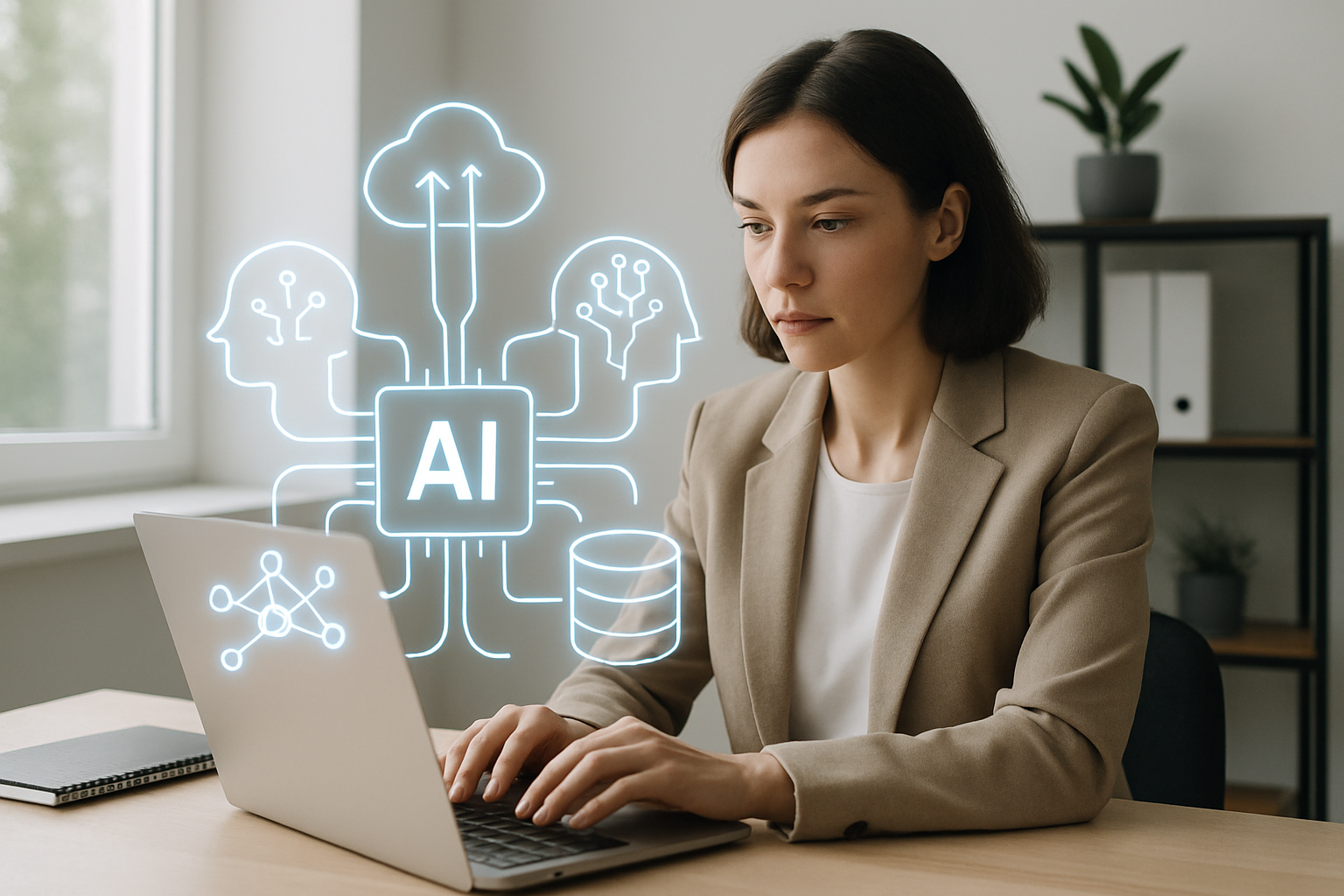
Have you ever wondered how many potential customers visit your website outside your business hours? Or how many leave because they can’t get an instant answer to a simple question? AI chatbots are no longer just for large companies. Now, SMEs can use this technology to capture, serve and qualify contacts automatically on their website, in a simple and cost-effective way. This article will help you understand how these virtual assistants work, what benefits they bring and how you can start using them in your business, without needing to be a technology expert.
What is an AI chatbot and how can it help you capture leads?
An AI chatbot is a program that simulates a conversation with your website visitors. Unlike traditional forms, the chatbot responds instantly, understands questions in natural language and guides people based on what they’re looking for. Its main goal in a business context is to capture leads, that is, the details of people interested in your products or services.
Why is it different from a form?
While a form asks for information statically (“Leave us your details and we’ll call you”), the chatbot holds an interactive conversation. For example, if you run a dental clinic, the chatbot can ask which treatment the visitor is interested in, suggest an appointment date and request their phone number to confirm it. This makes the process more natural and less intrusive.
A concrete example: local real estate agency
Imagine a real estate agency that receives many enquiries about rental properties. A chatbot can automatically ask which area they’re interested in, the budget and the number of bedrooms. If the visitor matches an available property, the chatbot itself can send photos and arrange a viewing. This saves time for both the customer and the sales team.
What kind of leads can you capture?
From people who want to book a table at a restaurant, to those who want a quote at a car workshop or request information in an e-commerce store. The chatbot adapts to different sectors and needs, filtering contacts based on genuine interest and preventing your team from spending time on irrelevant enquiries.
Main benefits for SMEs: savings, speed and a better experience
One of the biggest challenges for SMEs is making good use of time and resources. AI chatbots can make a real difference here.
Time and cost savings
Did you know a chatbot can answer dozens or hundreds of enquiries a day without a break? This frees your team from having to handle the same repeated questions (hours, prices, availability…). For example, a law firm that receives many similar questions about procedures can automate those answers and focus its lawyers on enquiries that genuinely require their input. According to Futurynia studies, a well-configured chatbot can save between 15 and 30 hours of human work a month, which is equivalent to saving between 300 and 700 euros a month in staffing costs.
Faster service and conversion
Immediacy is key: 70% of users abandon a website if they don’t get a response in under a minute. The chatbot responds instantly, which improves satisfaction and increases the likelihood that the visitor will leave their details. For example, a beauty-products e-commerce store can convert 25% more visitors into leads simply by resolving questions about shipping or returns in real time.
A better customer experience
A chatbot never gets tired or loses patience. It’s available 24/7, even on holidays. This conveys professionalism and trust. A small restaurant that receives bookings at any time can capture customers even in the early hours, and the chatbot can offer personalized recommendations based on the customer’s preferences.
How AI chatbots qualify leads and why it matters
Not every contact that reaches your website has the same value. Some are just looking for general information, while others are ready to buy or hire. This is where AI chatbots show their real usefulness: they can qualify leads, that is, identify which ones deserve your team’s priority attention.
How does automatic qualification work?
The chatbot asks key questions during the conversation: it needs to know the budget, the urgency, the type of product or service the visitor is looking for, etc. For example, in a car workshop, the chatbot can ask whether the breakdown is urgent or if it’s just for a routine service. If it detects an urgent case, it can alert the team to prioritize it.
Practical example: physiotherapy clinic
A clinic can use the chatbot to ask about the type of ailment, schedule availability and whether the patient has medical insurance. This way, the team only calls the leads that meet the requirements (for example, those who can come during the available hours and have coverage). This avoids pointless calls and improves efficiency.
Advantages of pre-qualification
You devote your resources to the contacts most likely to become customers. In addition, you reduce the sales team’s frustration by avoiding unproductive follow-ups. In many cases, SMEs manage to increase their closing rate by 30% simply by filtering leads better before they reach the human team.
Examples of SMEs already using AI chatbots to capture and qualify leads
The adoption of AI chatbots is already a reality among small and medium-sized businesses of all kinds. Here are some concrete cases to inspire you.
Law firm: more useful enquiries
A law firm in Barcelona implemented a chatbot on its website to handle questions about inheritances and divorces. Before, they received many incomplete forms and after-hours calls. Now, the chatbot filters users by their case, suggests an appointment and gathers basic information. The result: the number of useful enquiries rose by 40% and the time spent on informational calls was cut in half.
Local real estate agency: better-organized viewings
A neighborhood real estate agency used a chatbot to ask interested parties about area, property type and budget. Only the leads that matched the offering received an automatic invitation to view properties. The team stopped wasting time on irrelevant viewings and the closing rate rose by 35%.
Restaurant: automatic, personalized bookings
A small restaurant in Madrid installed a chatbot that manages bookings, suggests menus and asks about allergies or preferences. 60% of bookings now come through the chatbot, freeing staff from answering the phone at peak times.
Dental clinic: after-hours lead capture
A dental clinic in Valencia receives many enquiries at night. The chatbot handles after-hours queries, offers information about treatments and collects contact details. The next day, staff just have to confirm the appointments. New patient acquisition rose by 25%.
E-commerce: questions resolved and more sales
An online eco-products store integrated a chatbot to answer questions about shipping, returns and stock. Now, 80% of questions are resolved without human intervention and cart abandonment has dropped by 15%.
First steps to deploy an AI chatbot in your SME
If you’re considering adding an AI chatbot, you don’t need advanced technical knowledge. The process is simpler than you imagine, especially if you have specialized guidance.
1. Define your goals
Do you want to capture more contacts? Reduce repetitive calls? Qualify leads better? Prioritize what brings the most value to your business.
2. Identify the frequent questions and key processes
Make a list of the questions your customers ask most and the data you need to qualify a lead. For example, a workshop might note: “What kind of breakdown do you have?”, “When do you need the appointment?”, “Make and model of the car?”.
3. Choose a friendly approach
The chatbot should speak in a warm, clear tone. Personalize the messages so they reflect your company’s personality. For example, if you have an informal restaurant, use casual language.
4. Integrate the chatbot into your website
Once configured, the chatbot is easily added to your website (as a bubble or window in the corner). There’s no need to rebuild the whole page. Most platforms let you activate it within a few days.
5. Measure and adjust
Periodically review the conversations and adjust questions or answers based on the results. This way, the chatbot will keep learning and improving over time.
How much does it cost?
The cost depends on the volume of interactions and the level of personalization, but for most SMEs, the monthly investment is usually between 50 and 250 euros, far below the cost of a part-time employee. In addition, many consultancies (such as Futurynia) offer a free initial assessment to evaluate whether you really need a chatbot and how to get the most out of it.
FAQs about AI chatbots for capturing leads
Can chatbots fully replace human support?
No. Chatbots are ideal for handling frequent questions, capturing data and filtering contacts, but complex or sensitive cases should always be passed to a person. The goal is to complement your team, not replace it.
What happens if the chatbot doesn’t understand a question?
AI chatbots learn over time, but if they don’t understand a query, they can route the case to a human or make a note so someone on the team contacts the customer. It’s important to review these situations to improve the service.
Can you tell it’s a machine?
Today’s chatbots can hold very natural conversations. If you personalize the tone and the messages, most users don’t perceive it as cold or robotic. In addition, you can let the visitor know they’re talking to a virtual assistant.
What data can the chatbot collect?
You can ask for name, phone, email, preferences, schedules… always complying with data protection regulations. The chatbot only collects what you decide and can integrate with your CRM or management system.
Conclusion: a realistic opportunity for your SME
AI chatbots are no longer a futuristic novelty, but a practical and affordable tool for small and medium-sized businesses. They help capture more leads, filter quality contacts and improve your customers’ experience, all without increasing your fixed costs. If you want to know whether a chatbot could work in your case, at Futurynia we offer a free, no-obligation assessment. Visit futurynia.com and discover how to start taking advantage of artificial intelligence in your business.
More news

Want this in your business?
Tell us about your case and we’ll send you an assessment with the highest-impact automations. Reply within 24 hours.
Request received!
We’ll get back to you within 24 business hours.